

The essence of a third world war lies in the radical change of the entire global political architecture
World War III has either already begun or is in its opening stages. The multi-front plan initiated by Donald Trump has now become clear. The unipolar world is represented by the US, the West, and their allies, who seek either direct global hegemony or unification under Western dominance.
In contrast, the multipolar camp primarily includes Russia, China, India, the Islamic world, Latin America, and certain African nations, which are striving to maintain or revive their sovereignty. Essentially, these two worlds are colliding, with the West waging war on three main fronts: in Ukraine; in the Western Hemisphere with interventions in countries like Venezuela and Cuba; and in the Middle East with Israeli-American military operations against Iran and Shiite states, alongside actions in Gaza, Lebanon, and Yemen.
The geopolitics of World War III
Many analysts now argue that World War III has already started and that we are currently in its first stage. Whether or not this holds true will soon be revealed, but for now, let us assume the validity of this hypothesis and take a quick look at its geopolitical outlines.
The essence of a third world war lies in the radical change of the entire architecture of global politics. Today's international institutions have long ceased to correspond to the actual state of affairs. They remains structured according to the logic of the Westphalian system and the bipolar world.
The Westphalian model is based on the recognition of the sovereignty of all internationally recognized states. The UN is built on these same foundations. However, in practice, over the last hundred years, the principle of sovereignty has degenerated into pure hypocrisy.
The emergence of the West
In the 1930s, a system emerged in Europe in which only three powers, all strictly ideological, were dominant: 1) the bourgeois-capitalist West (Britain, US, France, etc.), 2) the communist USSR, and 3) the Axis powers with their fascist ideology.
This situation continued after the end of World War II, but only one of the ideological poles—fascism—disappeared. Meanwhile, the other two—capitalism and socialism—strengthened and expanded. Once again, no nation-state was truly sovereign. Some were ruled by Moscow, others by Washington.
The Non-Aligned Movement wavered between these two poles. The self-dissolution of the Warsaw Pact and the collapse of the USSR abolished bipolarity, and from that moment on, the United States remained the sole bearer of sovereignty. The UN and the Westphalian model became a fig leaf for global hegemony. Thus, a unipolar world emerged.
Deadlock
By the 1990s, it had become clear that international law needed to be revised in favor of either a world government (the liberal "end of history" version by Francis Fukuyama) or direct Western hegemony (American neoconservatives). European countries followed the world government scenario and, as a preparatory stage, ceded their sovereignty to the EU.
Everyone else was discreetly encouraged to prepare for the same. However, in the early 2000s, a new trend appeared: the desire to revive sovereignty in Russia and China. Moscow and Beijing worked to make sovereignty a reality rather than fiction.
This is how multipolarity made its presence felt. From then on, civilizational states—both established (Russia, China, India) and future ones (the Islamic world, Africa, Latin America)—were proposed as the bearers of sovereignty. These states emerged as the BRICS.
The first conflicts
As a result, the unipolar project collided with the multipolar one. Both globalists and neoconservatives opposed multipolarity. The probability of conflict was evident, and the old rules and norms left over from previous geopolitical eras no longer applied.
Whether World War III has already begun or not, its geopolitical content is clear: it is a war between unipolarity and multipolarity for a new global architecture, for the distribution of sovereign decision-making centers in the world—either only in the West or among increasingly powerful civilizational states.
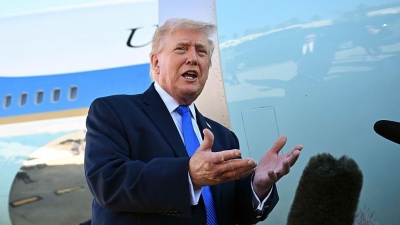
Donald Trump entered the White House for a second term in 2024 with an agenda suggesting he would embrace multipolarity: rejection of intervention, criticism of globalists, direct conflict with liberals, and sharp attacks on neoconservatives, focusing on US domestic problems and calling for a return to traditional values. All this suggested that Trump and his administration would embrace multipolarity but seek to ensure the best possible position for the United States within this new structure.
The reality
However, very quickly, the US government began to align with the neoconservatives and move away from its original position. This was followed by support for the genocide in Gaza, the continued provision of intelligence to Kyiv, the arrest of Maduro, preparations for an invasion of Cuba, and finally, the war against Iran, which included the assassination of the political leadership of the Islamic Republic of Iran.
Now Washington has fully embraced the neoconservative position and behaves as if it alone exercised real sovereignty globally: without any reference to rules or international law, it imposes its exclusive authority on the entire world. And it tries to prove this through action: wars, invasions, kidnappings of heads of state, and orchestrating regime change operations.
The multiple fronts
The United States started World War III in the context of maintaining, strengthening, and ultimately establishing a unipolar world order. Everyone else is invited to be either obedient vassals or enemies. Against these opponents of a unipolar world, Washington is waging the Third World War. Sovereignty is at stake. There is no single power capable of symmetrically opposing the United States; therefore, the United States is deploying military operations on several fronts simultaneously.
The start in Ukraine
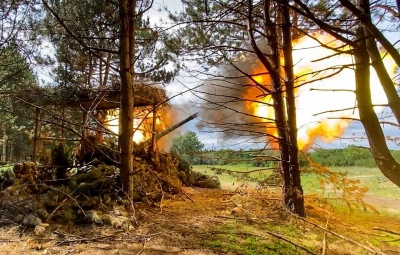
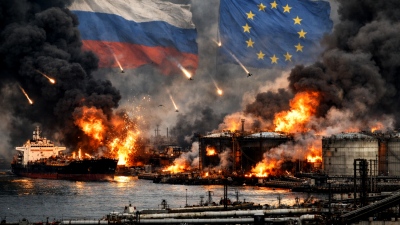
The first front in the war between the unipolar and multipolar worlds is Ukraine. This war was provoked by neoconservatives during the Obama era, and it was the globalists who were most involved, seeing Russia not only as a geopolitical obstacle to the establishment of a world government but also as an ideological threat.
Trump inherited this war and is not particularly happy about it (Russia is a nuclear power with a conservative ideology, with which the American president has no problem). But Moscow is clearly unwilling to recognize its vassalage to Washington, insisting on sovereignty and multipolarity, which is incompatible with unipolar hegemony.
In any case, Washington continues to support the Kyiv regime, although it is handing the initiative to the European countries of NATO, for whom this conflict is fundamental and ideological. This front remains important, and the more Moscow defends its sovereignty, the tougher Washington will become toward Russia.
The Latin American front
The second US front is the Western Hemisphere: the kidnapping of Maduro and the establishment of control in Venezuela, the preparation for an invasion of Cuba, and taking action against cartels in Mexico, Colombia, Ecuador, and so on. Essentially, it is a war across all of Latin America if any country there tries to resist the direct dictates of the United States.
Middle East
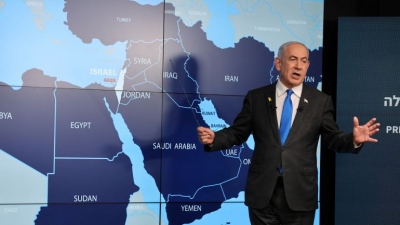
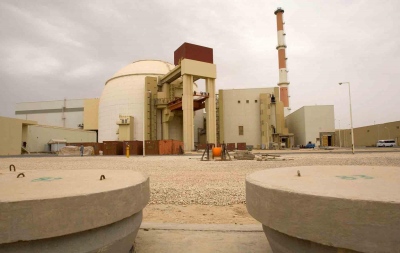
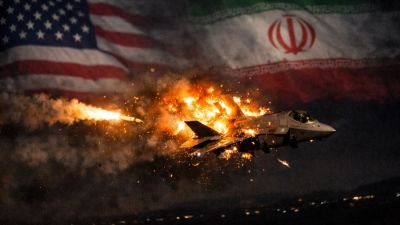
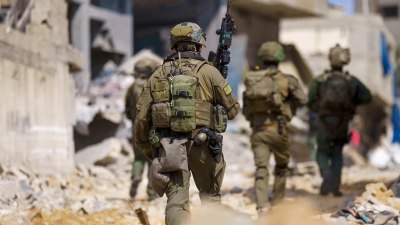
The third front, currently in its most intense phase, is the Israeli-American offensive against Iran, which has set the entire Middle East on fire. This also includes the ongoing military operations of Tel Aviv in Gaza, Lebanon, and Yemen, as well as the reshaping of the entire map of the Middle East.
Essentially, the West is currently waging a simultaneous war against three poles of a multipolar world (Russia, the Islamic world, and Latin America). Opening a fourth front—in the Pacific—is on the agenda.
The final conflict
Conflict with China is inevitable, given the global logic of ongoing changes in world politics. India, another civilizational state, is currently hesitating and, due to its differences with China and Pakistan, is drawn to the United States and Israel.
But India, with its potential, hardly fits the role of a submissive vassal, especially since multipolarity is the official policy of its government. Thus, the geopolitical map of World War III has been roughly sketched.
The two scenarios
The unipolar global party is represented by the United States, the West as a whole, and their vassals, including Japan and South Korea in the Far East. They are fighting for two not entirely identical scenarios: globalism (the EU and the Democratic Party of the United States) and direct American hegemony (the neoconservatives).
Netanyahu, however, has his own autonomous plans for building a Greater Israel, which is difficult to reconcile with liberal globalism but is fully supported by the White House, the neoconservatives, and the Christian Zionists. Overall, however, this coalition is relatively united against a multipolar world and, as escalation rises, will be forced to act increasingly coherently, putting aside internal contradictions for later.
The fragmentation
The multipolar global party is much more fragmented. Its main centers are Russia and China. Russia is already waging its own war in Ukraine, while China has so far avoided direct confrontation. The Islamic world is divided, with some Muslim countries being fully under US control.
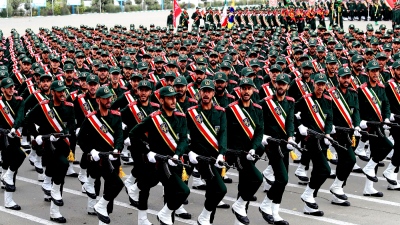
Iran and the Shiite world in general are the most radical. They are at the forefront of the confrontation with the West, but even the Iranians do not fully understand that other fronts in this war, particularly Ukraine, affect them directly. The leadership of the PRC, which more openly supports Russia in its confrontation with the West on the Ukrainian front, has a clear understanding of the overall geopolitical picture.
The "periphery"
Latin America is also fragmented. The Lula government in Brazil leans toward multipolarity, while the Milei regime in Argentina, on the contrary, supports the US-Israel axis. In Africa, the countries of the Sahel Alliance (Mali, Burkina Faso, and Niger) have a more acute awareness of multipolarity.
South Africa, the Central African Republic, Ethiopia, and some other countries are also close to this position. But they too do not have a unified stance. India maintains a neutral position—on the one hand, being part of a multipolar block of countries and, on the other, being a close ally of the United States and Israel.
Overall, the unipolar forces, despite their internal contradictions, are more unified and understand more clearly whom they are fighting and which interests and values they are fighting for. The differences in priorities, even in their understanding of the final model of the desired world order, between the West and the United States, do not prevent them from pursuing a unified strategy, close cooperation in intelligence communities, sharing military technologies, and so on.
The multipolar camp, on the other hand, is much more fragmented. Even the countries under direct attack from the unipolar West are slow to integrate their capabilities and engage directly in mutual support.
www.bankingnews.gr


Σχόλια αναγνωστών